
Getting rid of rats and mice starts with three things: finding how they got in, removing what attracts them, and placing the right traps in the right spots. In New Bern and the surrounding Eastern NC communities, the warm, humid climate and older housing stock make rodent pressure a year-round reality, not just a winter problem.
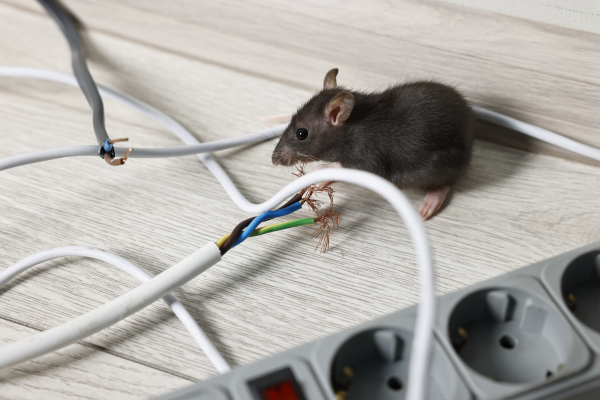
The clearest early signs are droppings, gnaw marks, and scratching sounds in walls or ceilings at night. House mouse droppings are roughly 1/8 inch long with pointed ends. Norway rat droppings are larger, about 3/4 inch, and blunt on both ends. Spotting either means the population is already established.
In New Bern’s older neighborhoods, such as Ghent or the areas near the Trent River waterfront, pier-and-beam foundations and aging crawl spaces give Norway rats easy access to the underside of a home. Don’t assume the problem is small just because you’ve only seen one rodent.
Rodents enter through gaps around pipes, utility lines, vents, and foundation cracks. A house mouse needs only a 1/4-inch opening, roughly the diameter of a pencil. Norway rats need about 1/2 inch. Both species are strong climbers and can enter through rooflines, soffit gaps, and attic vents just as easily as through ground-level cracks.
New Bern’s high humidity accelerates wood rot, which means gaps that didn’t exist two years ago can open up quickly. A thorough exterior inspection at least once a year is a reasonable habit for any homeowner in Craven County.
Effective rodent control follows a specific order: inspect, exclude, trap, and monitor. Skipping straight to traps without sealing entry points just means new rodents replace the ones you catch. Work through these steps in sequence for the best results.
Walk the entire exterior of the home at dusk with a flashlight. Look for rub marks, droppings, and any gap larger than 1/4 inch. Inside, check the attic, crawl space, and behind major appliances. Note every potential entry point before you buy a single trap.
This is the most important step and the one most homeowners skip. Use these materials based on the gap size:
Plain caulk or foam alone won’t stop a determined rat. Rodents can chew through soft materials in minutes. Always back soft sealants with a physical barrier like hardware cloth or sheet metal.
Place snap traps perpendicular to the wall with the trigger end touching the baseboard. Rodents travel along walls, not across open floors. For mice, space traps every 2 to 3 feet in active areas. For rats, every 15 to 20 feet is a reasonable starting point. Use peanut butter, chocolate, or nesting material (a small piece of cotton) as bait. Check traps daily.
| Trap Type | Best For | Typical Placement | Notes |
|---|---|---|---|
| Snap trap (wood or plastic) | Mice and rats | Along walls, in cabinets, attic | Most effective; kills quickly |
| Electronic trap | Mice and rats | Along walls, enclosed spaces | Higher upfront cost; no mess |
| Live/catch trap | Mice | Active runways | Requires frequent checking; release far from home |
| Glue board | Mice (not rats) | Along walls in dry areas | Less effective in humid climates; not recommended near pets |
| Rodenticide bait station | Rats (outdoor use) | Along exterior walls, away from children/pets | Requires careful placement; dead rodents may be hidden |
A trap that hasn’t caught anything in 3 days in a spot you know is active probably needs to be moved or re-baited. Keep traps set for at least 2 weeks after you stop catching rodents. One quiet week doesn’t mean the problem is solved.
Sealing every gap before you set a single trap is what separates a permanent fix from a temporary one.
Rodenticide bait can reduce a large population quickly, but it carries real risks in residential settings. Anticoagulant rodenticides are the most common type sold to consumers, and the U.S. Environmental Protection Agency has placed restrictions on certain second-generation anticoagulants for consumer use because of risks to pets, raptors, and other wildlife.

Rodent droppings, urine, and nesting material can carry hantavirus, leptospirosis, and salmonella. The CDC recommends specific cleanup steps to reduce exposure risk. Never vacuum or sweep droppings dry, as this aerosolizes particles.
In crawl spaces with heavy contamination, insulation often needs to be removed and replaced. This is a job where professional help is worth considering, both for safety and to make sure the cleanup is thorough.
Call a professional when DIY trapping hasn’t reduced activity after two weeks, when you can’t locate the entry points, or when the infestation is in a crawl space, attic, or wall void that’s difficult to access safely. Professional rodent control also makes sense as a first step if you’re dealing with rats rather than mice, since Norway rats are more cautious around new objects and harder to trap without experience.
River Pest LLC offers Rodent Control in New Bern, NC, including rodent trapping, removal, and exclusion services for homes across Craven County and the surrounding area. The team also handles general wildlife removal for squirrels, groundhogs, voles, moles, chipmunks, bats, and birds using humane and ethical solutions.
If you’re weighing a one-time treatment against an ongoing plan, the post on One-Time Pest Control Vs Ongoing Pest Control Plan: Which Saves More 2026? breaks down the cost difference honestly. For homeowners in nearby communities, River Pest also serves Pest Control in Havelock, NC and Pest Control in River Bend, NC. See the full Service Areas page for a complete list.
Rodents often share a home with other pests. If you’re also seeing roaches, check out Cockroach Control and Roach Exterminator in New Bern, NC for more on that problem.
If you’ve spotted droppings, heard scratching in the walls, or just want a professional set of eyes on your home before the problem gets bigger, call River Pest LLC at (252) 876-5360 to schedule an inspection. Ask any exterminator you contact and ask what their exclusion process looks like. Those two questions will tell you a lot about the quality of service you’ll get.
Check the droppings. Mouse droppings are about 1/8 inch long with pointed ends. Rat droppings are 3/4 inch or longer and blunt on both ends. Rats also leave larger gnaw marks and grease smears along walls. If you see the animal itself, mice are smaller (3 to 4 inches body length) and have large ears relative to their head size.
A house mouse can produce 5 to 10 litters per year, with 5 to 6 pups per litter. Young mice reach reproductive maturity in about 6 weeks. A small infestation can grow into dozens of rodents within a single season, which is why early action matters.
Yes, if entry points aren’t sealed. Trapping removes the current population, but new mice will move in through the same gaps. Exclusion (physically sealing every opening larger than 1/4 inch) is the only long-term solution. A professional inspection can find gaps that are easy to miss during a DIY walkthrough.
Peppermint oil, ammonia, and predator urine are often cited as mouse repellents, but none of them reliably stop an established infestation. They may cause temporary avoidance in a small area, but hungry rodents will work around them. Sealing entry points and removing food sources are far more effective than any scent-based deterrent.
Generally yes for a short period, but rodents do carry disease risk through droppings, urine, and bites. The CDC recommends avoiding direct contact with rodents and their waste, and cleaning contaminated areas carefully. Vulnerable household members (young children, elderly, immunocompromised) face higher risk, so prompt action is important.
A mild infestation caught early can often be resolved in 1 to 2 weeks with consistent trapping and exclusion. A larger or longer-established infestation, especially one spread across a crawl space or attic, may take 3 to 4 weeks or longer. Professional treatment typically speeds up the timeline significantly.
The evidence is weak. Several studies have found that rodents quickly habituate to ultrasonic devices, meaning any initial avoidance fades within days. The FTC has taken action against companies making exaggerated claims about these devices. They’re not a substitute for trapping and exclusion.
Rats are drawn by food, water, and shelter. Unsecured trash, pet food left out overnight, bird feeders, compost piles, and dense vegetation near the foundation are the most common attractants in Eastern NC yards. Eliminating these reduces the pressure on your home significantly, even before you seal a single gap.